Do You Need a Back Brace After an Osteoporotic Spine Fracture? What the Latest Evidence Says
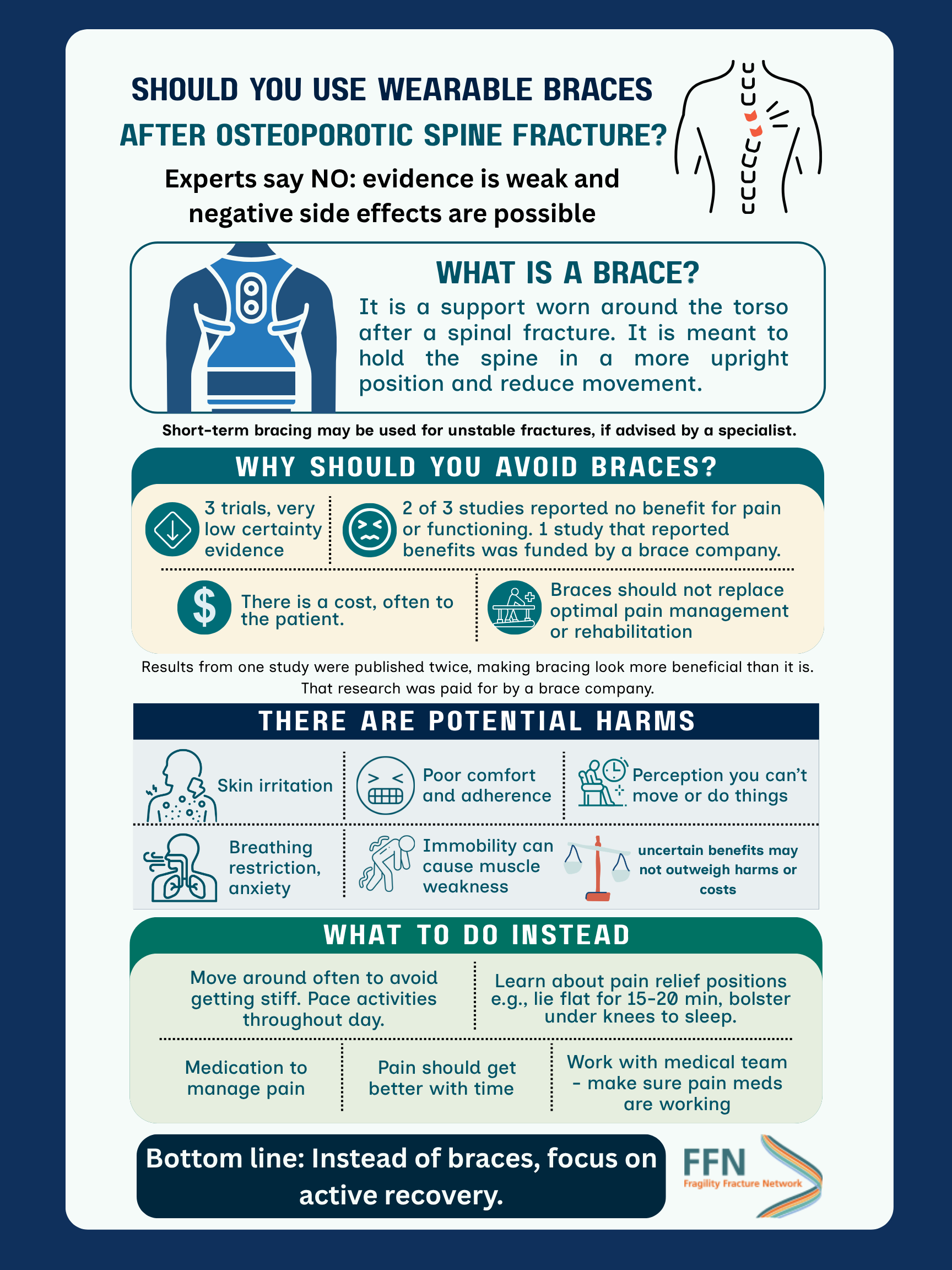
(for a printable version of the infographic, click HERE)
If you've had an osteoporosis-related spine fracture (also called a vertebral fracture), you may have had someone suggest wearing a back brace.
Many people assume a brace will help the spine heal, reduce pain, and prevent further injury. While this sounds reasonable, the latest research suggests that routine brace use may not provide the benefits many people expect.
In fact, experts now recommend that braces should not be used routinely after an osteoporotic vertebral fracture and should only be considered in specific situations after assessment by a specialist. Click here for recommendations for the care of vertebral fragility fractures (written for healthcare providers).
What is a Brace?
A spinal brace (or orthosis) is a device worn around the torso. It is designed to:
- Support the spine
- Encourage a more upright posture
- Limit movement
- Reduce strain on the back
Braces may be rigid or soft, and are often prescribed after a spine fracture with the goal of reducing pain and improving function.
What Does the Research Show?
A 2023 systematic review examined all available randomized controlled trials on bracing and taping for people with osteoporotic vertebral fractures. Researchers found only three small studies involving 146 participants. The overall quality of the evidence was rated as very low certainty. Here is the article.
Key findings included:
- Two of the three studies found no meaningful benefit of bracing for pain or physical function.
- The only study reporting notable benefits was funded by a brace manufacturer.
- There was not enough evidence to determine whether braces improve everyday function, quality of life, or long-term recovery.
- Researchers could not confidently determine whether braces cause harm because adverse effects were poorly reported.
The authors concluded that strong recommendations for bracing cannot be made because the evidence is limited and uncertain.
Why Do Experts Recommend Against Routine Bracing?
The Vertebral Fragility Fracture Care Model recommends not using bed rest or bracing routinely after an osteoporotic spine fracture. Instead, care should focus on pain management, movement, rehabilitation, and fracture prevention. That said, there may be some scenarios where a specialist might recommend a brace, such as when a fracture is unstable.
Potential concerns with braces include:
- Skin irritation
- Discomfort
- Benefits do not outweigh the costs
- Reduced adherence because the brace is difficult to wear
- Breathing restriction
- Anxiety about movement
- Muscle weakness from prolonged immobilization
- Increased belief that normal movement is unsafe
These downsides may outweigh potential benefits for many people.
What Should You Do Instead?
Current best-practice care focuses on active recovery, not immobilization.
1. Keep Moving
Gentle movement can help prevent stiffness and support recovery.
The recommendations in the care model advise avoiding prolonged bed rest and encouraging safe, gradual movement as tolerated.
2. Manage Pain Effectively
Pain is real and should be treated.
Talk with your healthcare team about:
- Appropriate pain medications
- Regular pain assessment
- Strategies that help you stay active during recovery
Pain often improves over time, although recovery can take several months. If pain is impairing your function, or is not managed well, revisit it with your healthcare providers to see if there are other options.
3. Use Pain-Relief Positions
The care model recommends simple positioning strategies, including:
- Lying on a firm surface flat on your back (knees bent at 90 degrees, feet flat on floor) for short periods (15–20 minutes). You can use a pillow or bolster under your knees.
- Use a pillow under your knees and lie flat while sleeping. If you have trouble getting out of bed you can try sleeping in a recliner for a short period.
- Avoid sitting or bed rest for long periods. Moving around helps prevent stiffness which can contribute to pain.
These approaches may provide relief without the drawbacks of a brace.
4. Work With Your Healthcare Team
Seek professional guidance if you experience:
- Persistent or worsening pain
- Difficulty functioning day-to-day
- Changes in posture that are getting worse
- Symptoms affecting the arms or legs
These may require specialist evaluation.
5. Focus on Preventing Future Fractures
A vertebral fracture is often a warning sign that bones need attention.
Your healthcare team may discuss:
- Osteoporosis medications
- Nutrition
- Balance and falls prevention
- Exercise programs designed for osteoporosis
- Ongoing monitoring and follow-up
These strategies can help reduce the risk of future fractures.
Are There Any Situations Where a Brace Might Help?
Possibly.
The Fragility Fracture Network care model notes that bracing may sometimes be considered after specialist assessment, particularly for complex or unstable fractures and only as part of a broader management plan. However, this is different from routinely prescribing braces to everyone with an osteoporotic vertebral fracture.
Bottom Line
If you've experienced an osteoporosis-related spine fracture, the latest evidence does not support routine brace use for most people.
Instead of relying on a brace, experts recommend focusing on:
- Pain management
- Safe movement
- Rehabilitation
- Falls prevention
- Osteoporosis treatment
- Active recovery
For most people, recovery after a vertebral fracture is about building confidence, staying as active as possible, and working with a healthcare team to support both healing and long-term bone health.
Remember: Every fracture is different. Always discuss treatment options with your healthcare provider.
For a printable version of the infographic click HERE.